


Looking at hundreds of bottles and not sure where to start? That's completely normal. Wine is a big subject, and there's no single right answer. But a few good questions will narrow down your choice quickly.
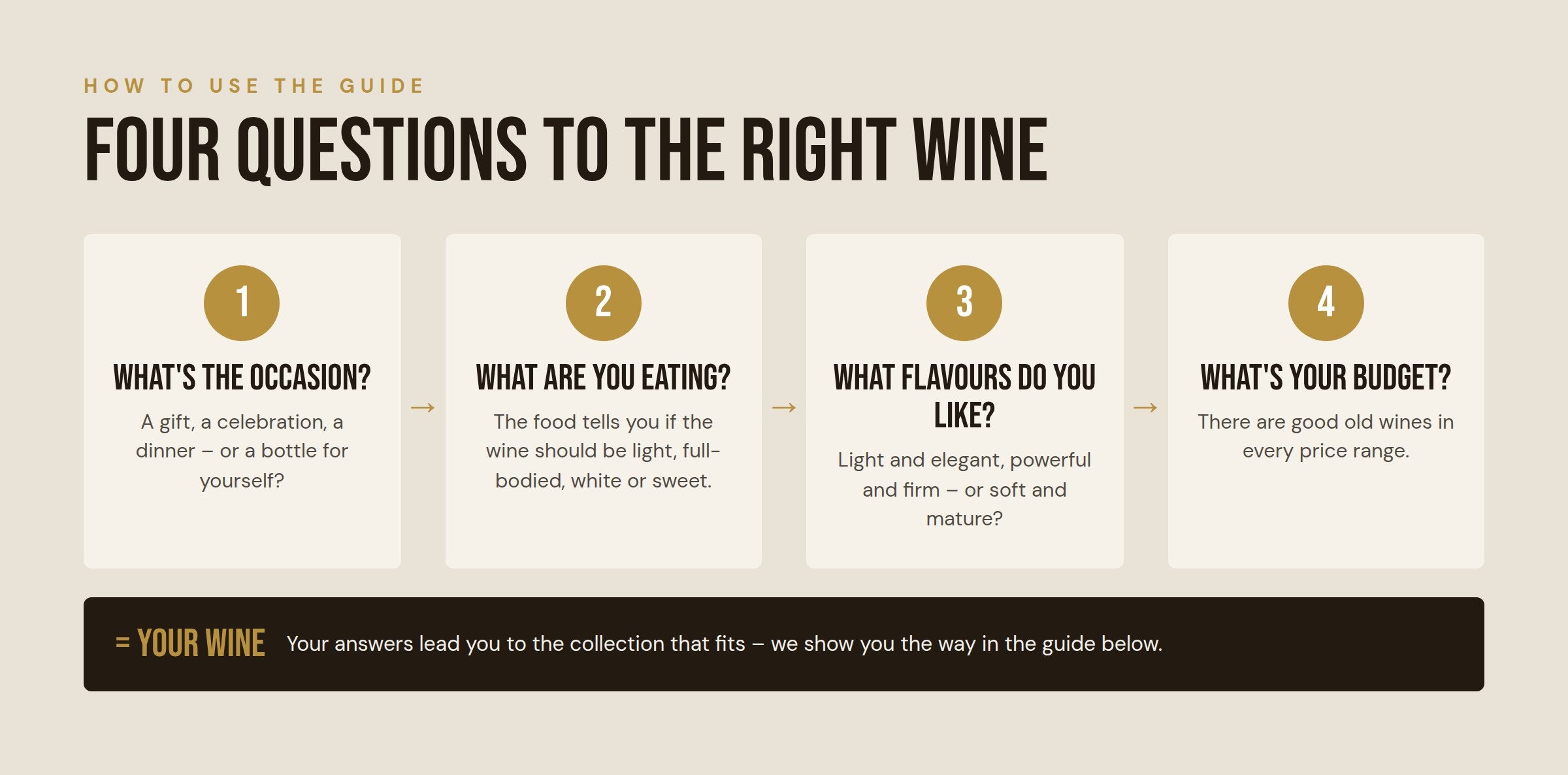
In this guide, we take you through four questions: What's the occasion, what are you eating, what flavours do you enjoy, and what's your budget? Based on your answers, we show you which type of wine fits – and where to find it in our range.
Question 1: What's the occasion?
The occasion is the best place to start. A bottle for a birthday has a different job than a bottle for a Friday dinner.
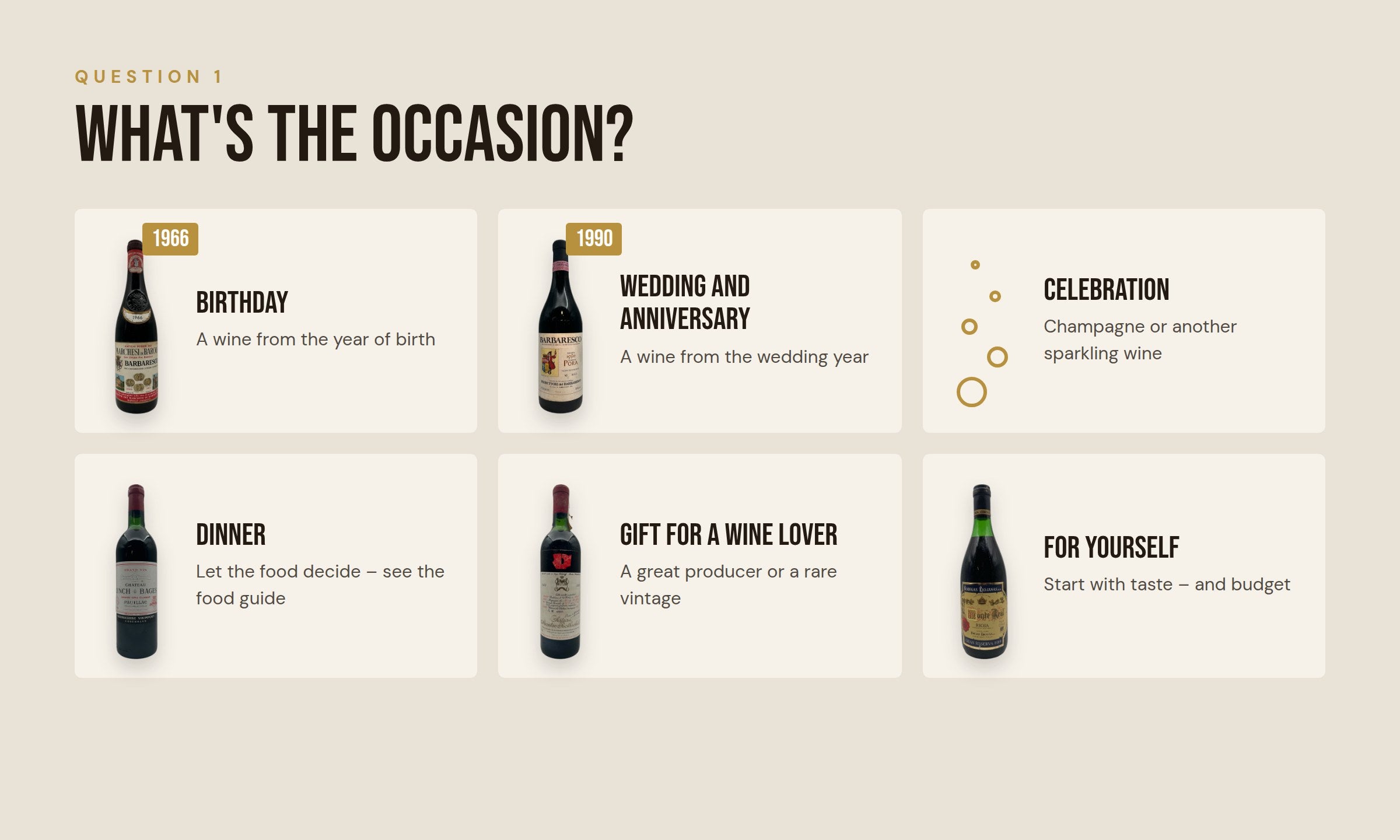
| Occasion | Our suggestion | Where to find it |
|---|---|---|
| Birthday | A wine from the year of birth – a gift with a story | Vintage wines by year |
| Wedding and anniversary | A wine from the wedding year or the year the company was founded | Vintage wines by year |
| Celebration | Bubbles belong at a celebration | Champagne |
| Dinner | Let the food decide – see question 2 | See below |
| Gift for a wine lover | A famous producer or a rare vintage | Premium and exclusive wines |
| Gift without a specific vintage | A mature classic that suits most people | Wine gifts |
The gift with a vintage
A wine from the recipient's birth year is one of the most personal gifts you can give. The bottle has been waiting for as many years as the recipient has been alive. The same goes for a wedding year or an anniversary.
A good tip: It doesn't have to be a famous top vintage. What matters most is the year – and that the bottle has been stored well.
Question 2: What are you eating?
If the wine is for a meal, the food is your best guide. The basic rule is simple: Rich food needs a powerful wine, and light food a light wine.
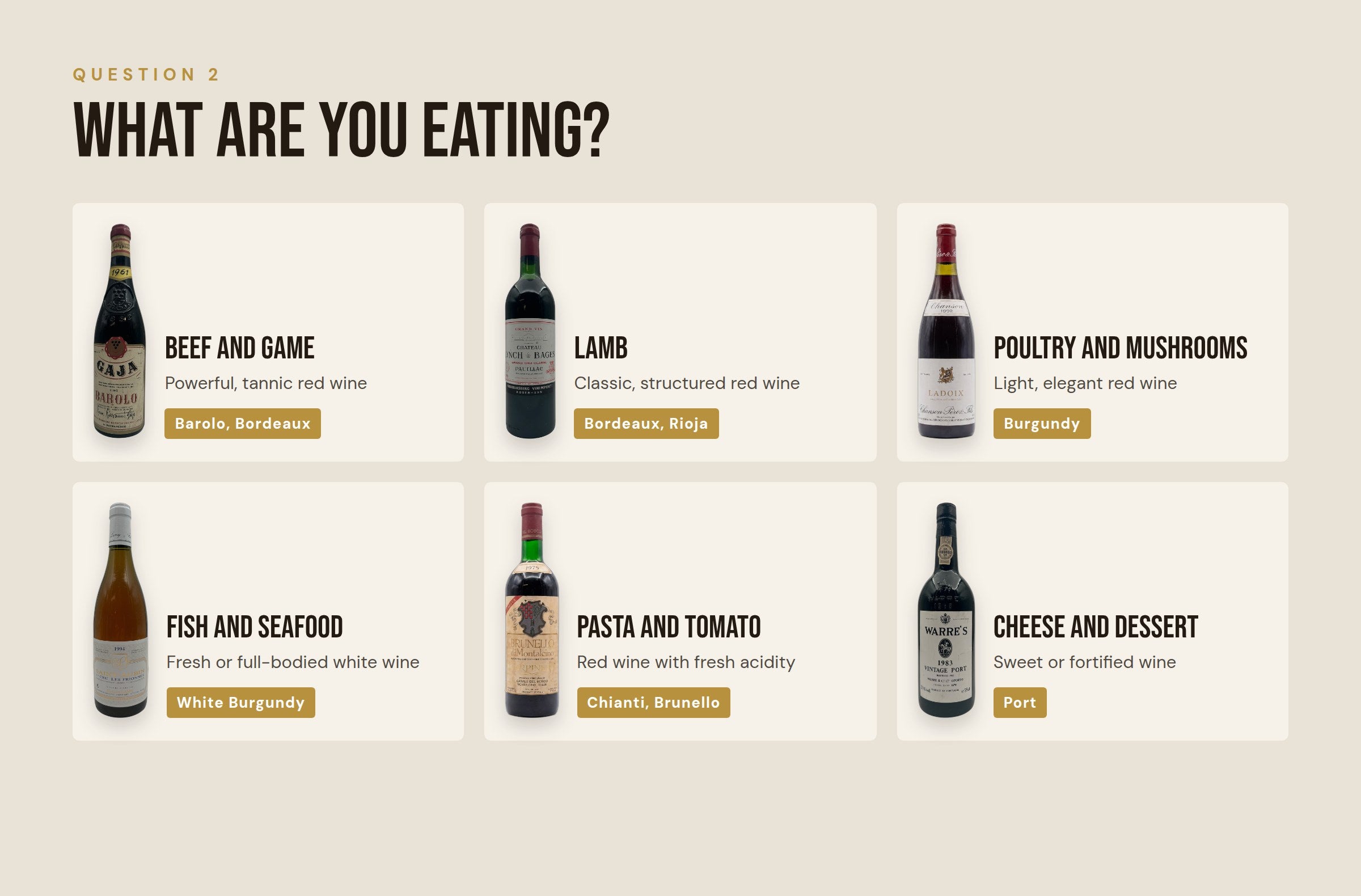
| The food | The wine | Where to find it |
|---|---|---|
| Beef and game | Powerful, tannic red wine | Barolo or Bordeaux |
| Lamb | Classic, structured red wine | Bordeaux or Rioja |
| Poultry and mushrooms | Light, elegant red wine | Burgundy |
| Fish and seafood | Fresh or full-bodied white wine | White Burgundy |
| Pasta and tomato | Red wine with fresh acidity | Tuscany |
| Cheese and dessert | Sweet or fortified wine | Port |
Old wines are more delicate than young ones. They go best with food that isn't too spicy or strongly flavoured, so the wine's subtle notes don't get lost.
Question 3: What flavours do you enjoy?
Roughly speaking, wine can be placed on two axes: Is it light or full-bodied? And is it firm and tannic, or soft and round? The map here shows where the classic regions typically sit.
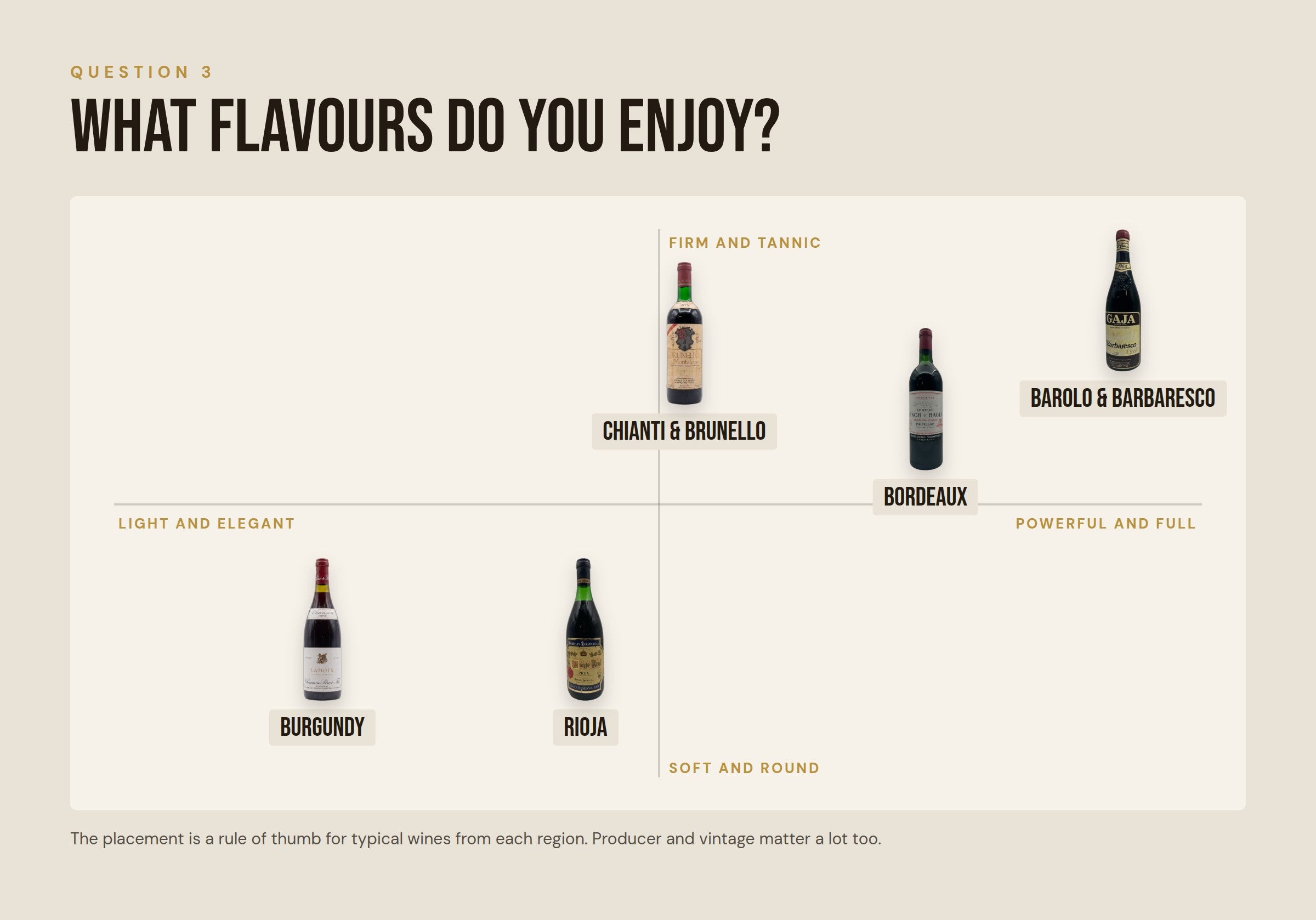
- Do you like light, elegant red wine? Then Burgundy is a good place to start. The grape is Pinot Noir, which gives wines with fine acidity and soft tannins.
- Do you like soft, rounded red wine? Try a mature Rioja. Gran Reserva is aged for a long time before release and is often soft and ready to drink.
- Do you like fresh acidity and cherry fruit? Then Chianti and Brunello from Tuscany are worth trying. The grape is Sangiovese.
- Do you like classic, structured red wine? Then Bordeaux is the obvious choice. The wines are often blends of Cabernet Sauvignon and Merlot.
- Do you like powerful, firm red wine? Then look to Barolo and Barbaresco from Piedmont. The Nebbiolo grape gives tannic wines that benefit from time.
Young or mature wine?
There's a big difference between a young and a mature wine. A young wine is dominated by fresh fruit. Over the years, the fruit steps back and other notes come forward – like leather, tobacco, mushrooms and dried fruit. The tannins also soften.
If you like that development, an older vintage is the right choice. If you're unsure, start with a wine that has a few years behind it, but isn't too old.
Question 4: What's your budget?
Good old wines come in every price range. The price depends mostly on the producer, the vintage and how rare the bottle is – not just on its age.
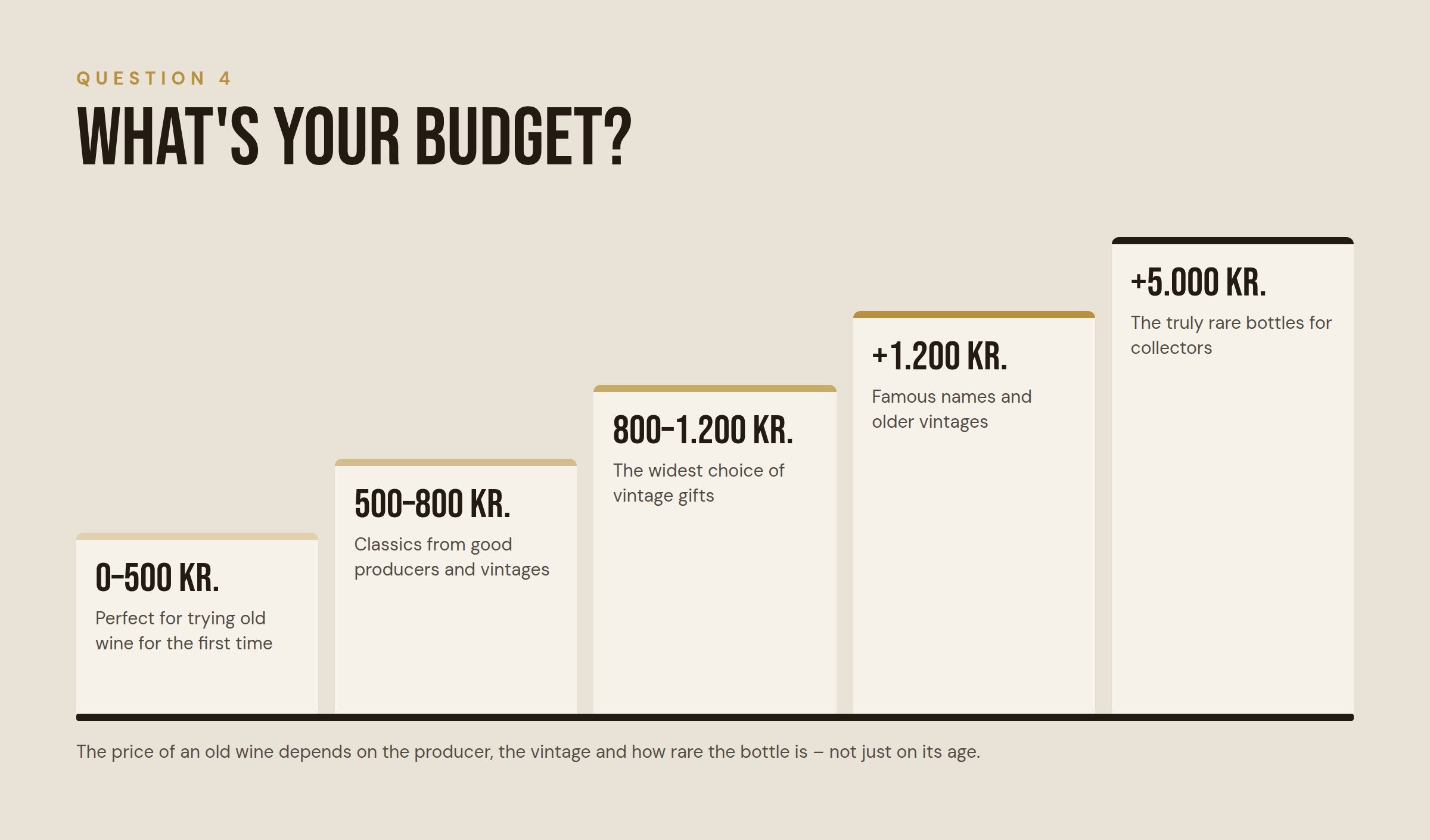
- Is this your first time trying old wine? Then start with our affordable vintage wines. You get the experience of a mature wine without paying for a big name.
- Is it a gift for someone who has everything? Then take a look at our premium and exclusive wines with famous names and rare vintages.
What the choice can look like
Here are four examples of how the four questions lead to a bottle.
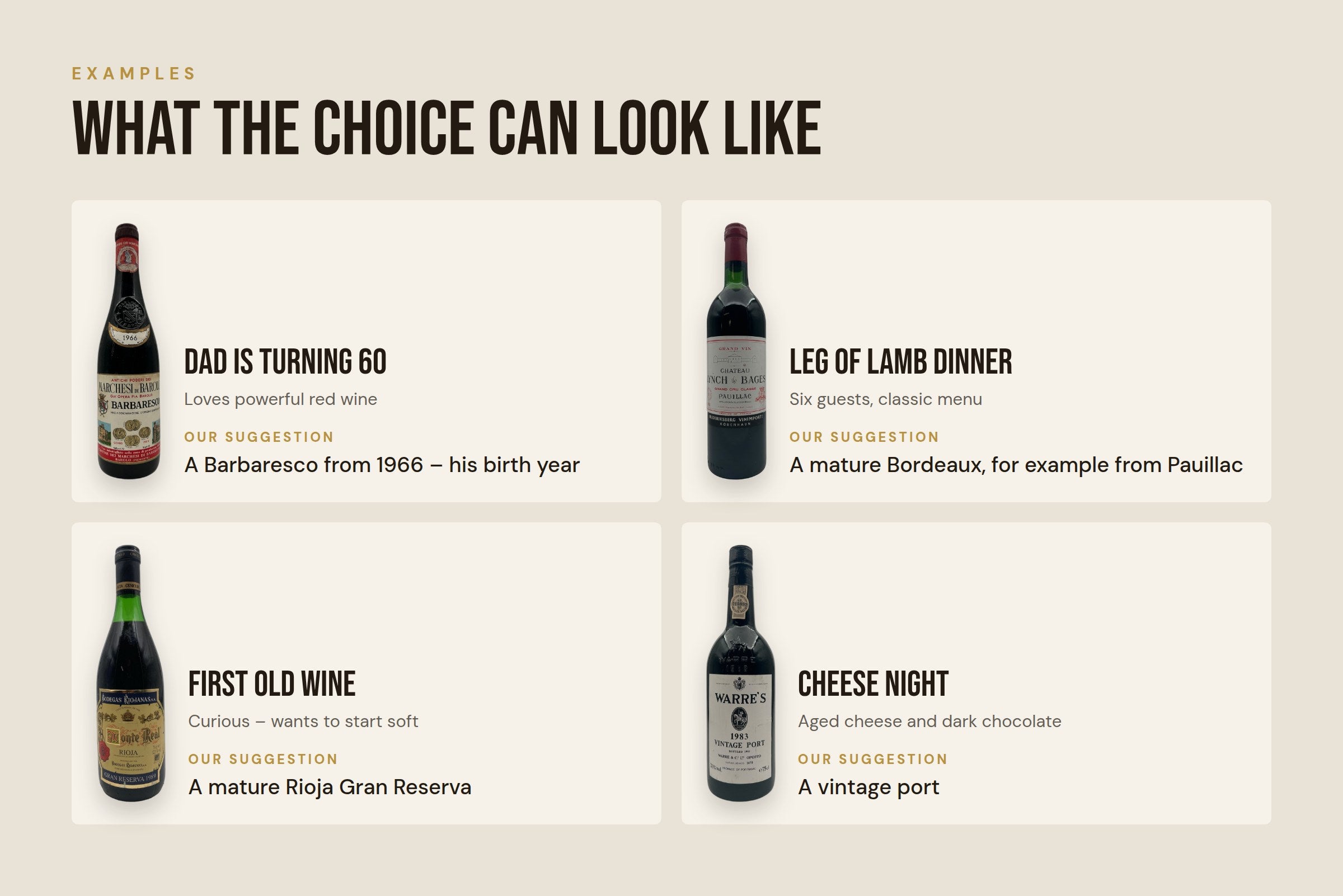
- Dad is turning 60 and loves powerful red wine. The occasion is a birthday, so we start with the year of birth. His taste points to Piedmont. Our suggestion: a Barbaresco or Barolo from his birth year.
- Leg of lamb dinner for six. The food is classic and rich. Our suggestion: a mature Bordeaux, for example from Pauillac, or a Rioja Gran Reserva.
- Your first old wine – and you want to start soft. A mature Rioja Gran Reserva is a good choice here, because it's soft and approachable. If you need to keep to a tight budget, look through our affordable vintage wines.
- Cheese night with aged cheese and dark chocolate. Here, a vintage port is the classic choice.
Good advice once you've chosen
- Have you bought an old bottle? Stand it upright for a day or more before opening, so the sediment can settle.
- Not sure what vintage wine is? Read our guide to vintage wine before you choose.
- Still can't decide? Then write to us. We're happy to help you find the right bottle.


