


Wijn 1947
6 producten


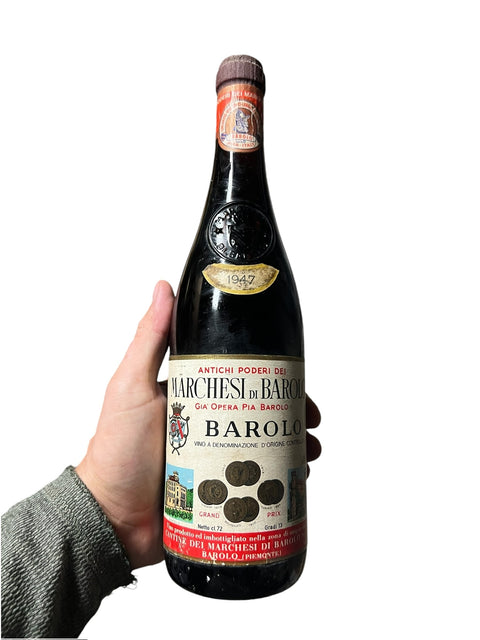
Het verhaal achter wijn 1947 uit Italië
Stel je voor dat je teruggaat naar de tijd net na de Tweede Wereldoorlog, toen een van de belangrijkste wijnjaren in de moderne wijngeschiedenis ontstond. Het verhaal achter deze wijn uit 1947 uit Italië markeert een beslissend keerpunt voor de wijnproductie van het land. Ondanks de moeilijke naoorlogse omstandigheden slaagden de wijnboeren erin wijnen met een opmerkelijk karakter te creëren. Tegenwoordig wordt de vintage algemeen erkend als een legendarische ‘grand annata’ die het startsein gaf voor de wederopbouw van de wereldwijde reputatie van de klassieke Italiaanse wijnregio’s.
De weersomstandigheden en de oogst in het naoorlogse Italië
De periode na de oorlog in Italië werd gekenmerkt door een groot gebrek aan middelen, en de wijnbouwers werkten onder extreem moeilijke omstandigheden met beperkte toegang tot technologische apparatuur. Basismaterialen zoals nieuw serviesgoed, flessen en kurken ontbraken en moderne voorzieningen voor temperatuurbeheersing bestonden niet. Daarom moesten de wijnmakers vaak improviseren, bijvoorbeeld door ijs te gebruiken om de gistingstanks af te koelen, zodat de wijn onder de warme omstandigheden niet beschadigd raakte. Maar ondanks deze logistieke uitdagingen zorgde de natuur voor de juiste omstandigheden voor een vrij ongebruikelijke oogst.
Het jaar begon met een koude winter, waarbij de temperaturen onder de min 10 graden daalden, waardoor het seizoen werd uitgesteld. Maar vanaf juli veranderde het weer aanzienlijk, en een extreme, droge hittegolf duurde tot in september. De droge en winderige omstandigheden hielden ziekten op afstand en zorgden ervoor dat de druiven, vooral de laatrijpe variëteiten, de volledige fenolische rijpheid bereikten. Dit resulteerde in een lage maar enorm geconcentreerde oogstopbrengst met een zeer hoog suikergehalte.
Kenmerken van een klassieke Barolo uit de periode
De extreme klimatologische omstandigheden in 1947 hebben een duidelijke stempel gedrukt op het profiel van de wijn. Een klassieke Barolo uit deze vintage staat bekend om zijn krachtige, volle en robuuste structuur, die een hoog alcoholpercentage prachtig combineert met stimulerende, stevige tannines. Dankzij een inherente en aangename zuurgraad heeft de wijn een frisheid behouden die voorkomt dat hij zwaar aanvoelt, zelfs met de zeer rijpe en rijke fruittonen. De wijnen worden gemaakt volgens de volledig traditionele methoden met een lange maceratietijd, gevolgd door rijping in grote, neutrale eiken- of kastanjehouten vaten, waardoor ze een rustieke en complexe uitstraling krijgen.
Wanneer u een glas inschenkt, zult u merken dat het aromaprofiel in deze historische flessen diep en veelzijdig is. Ze bieden doorgaans de klassieke tonen van gedroogde rozen, teer, leer, kamfer, gedroogde viooltjes en truffel. Het warme groeiseizoen heeft ook intense nuances van rijp fruit voortgebracht, zoals pruimen, gedroogde kersen en gebakken pruimen, die vaak gepaard gaan met zoute en aardse elementen, maar ook met tabak en theebladeren. Deze fijne balans tussen kracht en finesse heeft ervoor gezorgd dat de wijnen een enorm rijpingspotentieel hebben, en goed bewaarde flessen worden vandaag de dag nog steeds erkend vanwege hun vitaliteit en lange afdronk.
Hoe kies je de juiste wijn 1947 als cadeau
Het cadeau geven van een oudere vintage wijn is een ongelooflijk doordacht gebaar dat herinneringen oproept, maar het vinden van de juiste fles vergt wat nadenken. Wanneer u een historische wijn koopt, incl onze wijn uit de collectie van 1937zijn er enkele praktische elementen die bijdragen aan een goede smaakbeleving voor de ontvanger. Hieronder vindt u een reeks concrete stappen hoe u het beste een mooie geschenkfles kunt kiezen en overhandigen.
- Beoordeel de wijnvoorkeuren van de ontvanger: Begin door na te denken over welke soorten wijn de ontvanger gewoonlijk lekker vindt. Veel oudere wijnen hebben een duidelijk ander en meer ontwikkeld smaakprofiel dan de jonge wijnen, en bieden vaak minder frisse fruittonen ten gunste van meer tertiaire aroma's zoals leer, bosbodem en gedroogd fruit. Het is een duidelijk voordeel om te weten of de ontvanger rijpe, gestructureerde wijnen met veel diepgang waardeert.
- Focus op de opslaggeschiedenis: Om ervoor te zorgen dat een wijn zich gedurende tientallen jaren positief kan ontwikkelen, is het van cruciaal belang dat hij op de juiste manier wordt bewaard. Het is daarom belangrijk om flessen te kiezen die onder optimale omstandigheden zijn bewaard met een stabiele, koele temperatuur en de juiste luchtvochtigheid, omdat dit ervoor zorgt dat de wijn nog leeft en zijn oorspronkelijke karakter heeft behouden.
- Houd rekening met de visuele staat van de wijn: Bij het kopen van historische flessen moet je altijd kijken naar de fysieke staat van de wijn. Het vloeistofniveau in de fles, ook wel ullage genoemd, daalt in de loop van de tijd heel natuurlijk, maar moet nog steeds op een acceptabel niveau liggen voor de leeftijd van de wijn. Een intacte kurk en een mooi bewaard gebleven etiket zijn goede indicaties dat er door de jaren heen met grote zorg met de fles is omgegaan.
- Advies over de eetervaring: Het kan een grote hulp zijn om de ontvanger te vertellen hoe de wijn het beste kan worden genoten. Zeer oude wijnen zijn kwetsbaar en moeten bij voorkeur een paar dagen voor opening worden gerijpt, zodat eventueel bezinksel kan bezinken. Ze vereisen meestal een zorgvuldige opening met een speciale kurkentrekker, en ze mogen zelden langdurig worden gedecanteerd, omdat ze door sterke oxygenatie snel hun fijne aroma's kunnen verliezen.
Bekende wijnhuizen achter onze Italiaanse selectie
Ons assortiment historische Italiaanse wijnen inclusief wijn uit 1957, inclusief flessen van enkele van de meest gerenommeerde en traditionele producenten van het land. Door de eeuwen heen hebben deze wijnhuizen een cruciale rol gespeeld bij het definiëren, vernieuwen en behouden van de klassieke Italiaanse wijnbereidingsmethoden. Hieronder leest u meer over een aantal belangrijke fabrikanten die in de collectie vertegenwoordigd zijn.
- Marchesi di Barolo: Deze historische wijnmakerij heeft wortels die teruggaan tot het begin van de 19e eeuw. Het huis wordt gecrediteerd voor het transformeren van Barolo van een zoete wijn naar de droge en resistente rode wijn waar we vandaag de dag van genieten. Het wijnhuis werkt samen met gerenommeerde wijngaarden zoals Cannubi en staat bekend om het creëren van elegante, terroirgedreven wijnen met een enorm rijpingspotentieel.
- Giacomo Borgogno & Figli: Dit is de oudste continu werkende producent in de regio Barolo, opgericht in 1761. Borgogno staat bekend om het handhaven van strikte, traditionele methoden. Het huis maakt gebruik van lange, spontane fermentatieprocessen in betonnen tanks en langdurige opslag in grote Slavonische eikenhouten vaten. Ze staan vooral bekend om hun uitgebreide bibliotheek met oudere Riserva-wijnjaren.
- Casa E. di Mirafiore: Opgericht in 1878 door de zoon van de eerste koning van Italië, speelde de wijnmakerij een belangrijke rol bij de internationale export van Barolo. Mirafiore staat bekend om historische innovaties, waaronder de introductie van de eerste betonnen vaten in Europa. Tegelijkertijd behouden ze traditionele methoden zoals lange maceratie van erkende velden zoals Lazzarito en Paiagallo.
- Nino Negri: Deze wijnmakerij, opgericht in 1897 in de regio Valtellina, staat vandaag de dag symbool voor de extreme bergwijnbouw op steile, oude terrassen omgeven door stenen muren. Nino Negri is vooral beroemd om zijn Sforzato-wijnen, die worden gemaakt door de Nebbiolo-druiven met de hand te oogsten en ze vervolgens op natuurlijke wijze in de koele alpenlucht te laten drogen voordat ze worden gevinifieerd.


